Gul Rukh of Peshawar
In April 1803, at Peshawar, after praying for two years, Muhammad Mustafa Anwar and Inshah Bee were blessed with a beautiful, divine-looking girl named Gul Rukh, who later became known as Hazrat Babajaan. Her father’s family business was dry fruits: almonds, cashew nuts and the like.
Until the age of nine Hazrat Babajaan could not speak, and her parents thought their child was deaf and mute, but she was not. Allah Ta’ala had done this because He knows best: He wanted her to become a scholar of the Holy Quran (hafiz). At the age of ten she took Islamic knowledge (fiqh) from Sayyed Mustafa Saheb. Hazrat Babajaan spent all her time in namaz, in reading the Quran and in devotion to Allah.
At the age of 24 her mother passed away, and all the responsibility fell to her. After doing the household work, Babajaan gave all her time to namaz and the reading of the Quran. But as word of her devotion (ibadat) spread across the area, people gathered at her house. Day by day the news spread through every city and town, and people from many places came to her door. She did not like this, so she went into disguise. She spent a long time in the forest, living on raw and ripe fruits.
Journeys through India
In 1841 Hazrat Babajaan turned to India. She visited the shrines of Bombay and spent a long time there. She also visited Ajmer, the shrine of Shahenshah-e-Hindustan Hazrat Khwaja Moinuddin Chishti, Ata-e-Rasool, and stayed for many weeks.
She then went on to Ahmedabad and stayed for a year, and moved to Surat, where she visited the shrines and stayed for seven years. At the age of 65 she went again to Bombay and visited its shrines, offering nayazmandi at many of them for six months or more.
Haj
In April 1903 Hazrat Babajaan went on Haj, the journey to Mecca and Madina, aboard a ship named Haidri. Among those travelling with her were Noor Mohammad Mitha Saheb and Noor Mohammad Boha Paik Saheb. On the voyage Babajaan spoke Irani, Farsi, Arabic, Urdu and even English; she used to speak with the sailors in English. This was a real wonder.
Days passed, and one day the ship was caught in a storm, with water coming onto the ship. At once Babajaan called Noor Mohammad Boha Saheb and told him to cover his hand with a scarf, collect one paisa from each and every person on the ship, and pray to Allah:
“I pray for my sins and everyone’s sins; please forgive us. Forgive us for the sake of Prophet Muhammad (ﷺ), Your beloved. Save us from this ocean disaster, and we will all make niyaz in the name of Your beloved Prophet Muhammad (ﷺ).”
Noor Muhammad collected one paisa from each person, and everyone gave with happiness and joy. Everyone prayed to Allah and asked for forgiveness, and after some time the storm slowly passed. Seeing this, everyone came to fall at Babajaan’s feet, but she did not like this.
When she reached Mecca, many people came to visit her and offered her whatever they had, and soon word of her spread all over Mecca. She left Mecca as soon as possible, visited Madina, and made niyaz with the money that had been collected, offering it to the poor and the needy.
Arrival in Pune
Babajan returned to Bombay and soon afterwards proceeded to Ajmer in northern India to pay homage at the tomb of the Sufi saint Moinuddin Chishti, who established the Chishti Order of Islam in India. From Ajmer she again returned to Bombay, and soon after travelled on to Pune.
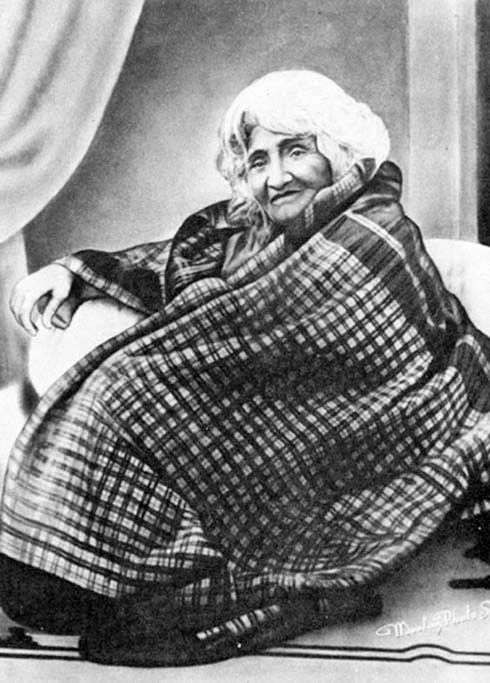
By 1905 Babajan had arrived in Pune, where she established her final residence. Now an old woman, her back slightly bent, shoulders rounded, with white matted hair, and shabbily dressed, she
was seen sitting or resting at odd places, in different parts of the City.
Babajan finally settled in a slum area called Char Bawdi.